
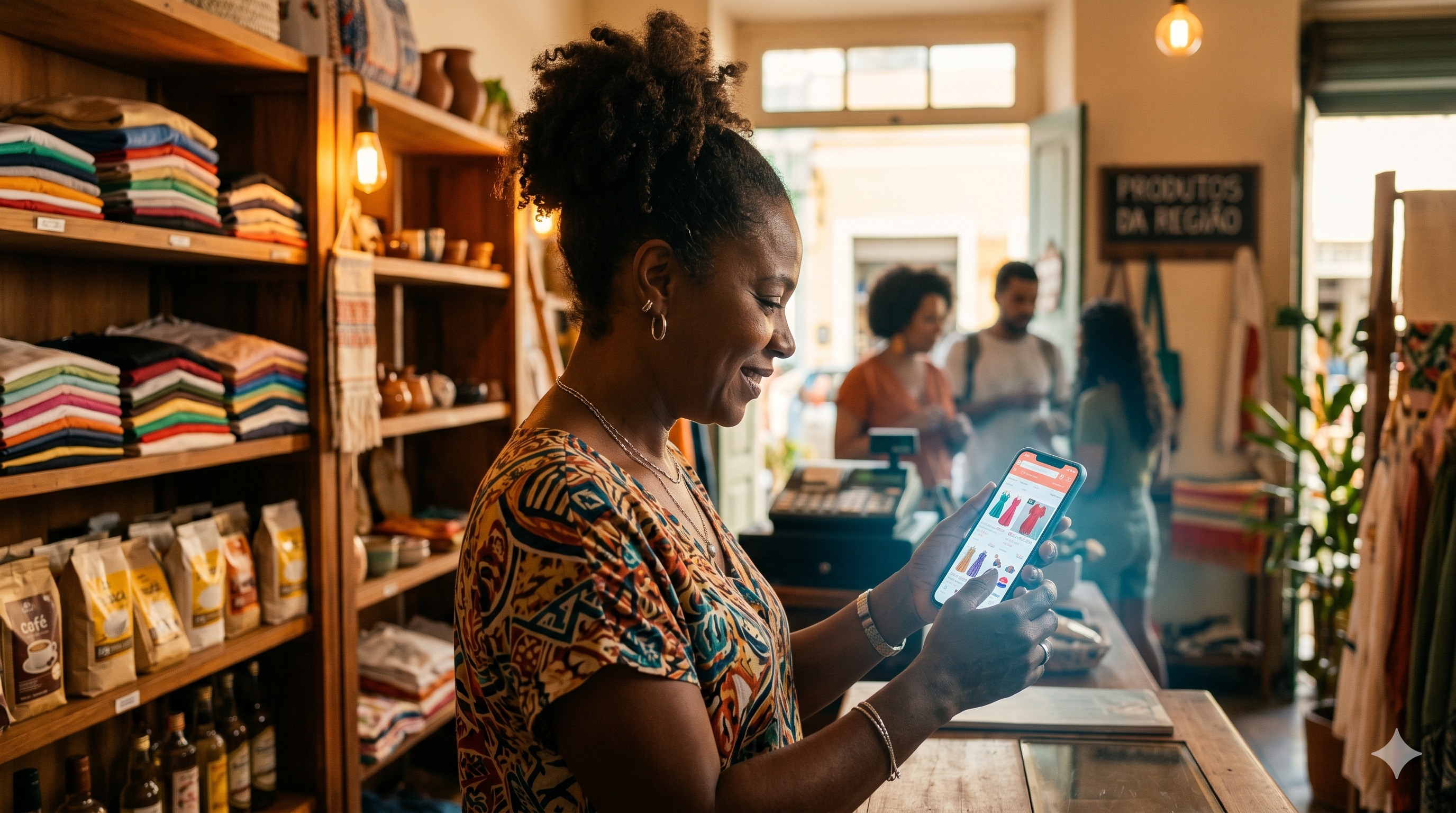

On May 13, 2026, the Brazilian federal government issued the Provisional Measure zeroing the import tax on international purchases of up to USD 50. The so-called "blusinhas tax" (which had charged 20% on these purchases since 2024) no longer exists, at least for now: the exemption runs through year-end, when Brazil's new tax reform rules take effect.
For consumers, the message is straightforward: Shein, Shopee, and AliExpress are back to lower prices without the federal surcharge. For small Brazilian retailers, especially those selling clothing, accessories, home goods, and electronics in physical or digital storefronts, the playing field just got harder again, and figuring out what to do about it is more urgent than hoping the measure gets reversed.
What Actually Changed
The 20% tax created in 2024 was an attempt to level the playing field between domestic retail and Asian platforms, which have historically operated under a much lower tax burden than any Brazilian merchant pays. With the Provisional Measure, that leveling is gone.
State ICMS tax still applies to international purchases, but in Minas Gerais the rate stays at 17% (Governor Zema chose not to join the ten other states that raised it to 20% in 2025), and that charge already existed before the blusinhas tax without preventing the platforms' price advantage. The Brazilian Confederation of Commercial Associations (CACB) was blunt in its criticism: the measure "subsidizes the foreign competitor at the expense of the small merchant, who pays every tax in full." The estimated fiscal impact is R$ 1.94 billion in lost federal revenue in 2026 alone.
Retail and domestic industry are pushing back hard, and some read the decision as an electoral move, but while the political debate plays out, merchants need to make practical decisions. That starts with understanding where the competition can, and cannot, be fought.
The Price War Trap
The first instinct many retailers have when facing price pressure is to try to keep up: cut margins, offer discounts, stay in the same ballpark as the cheapest option. That strategy almost always ends badly for anyone who doesn't have the scale to sustain it.
Shein and Shopee have cost structures that a local retailer in our region simply cannot replicate: manufacturing in countries with very low labor costs, massive order volumes that spread freight and logistics thin, and dynamic pricing technology that adjusts values in real time. Competing on price against those platforms is like entering an arm-wrestling match against someone three times your size, with the outcome decided before it begins.
The right question isn't "how do I lower my price to compete?" It's "why would a customer here in Northern Minas Gerais buy from me instead of from Shein?" The answer to that question is where strategy lives.
What Local Commerce Has That the Platforms Don't
Asian platforms sell products. Local retailers can sell trust, real convenience, and relationship — advantages that don't show up in any marketplace price filter but that carry a lot of weight in purchasing decisions, especially in smaller cities.
Think about what happens when something goes wrong with a Shein order: the customer files a ticket with an automated chat, waits days for a response, has to ship the product back overseas, and often gives up on the refund because the process is too long and bureaucratic. At a local store, the customer walks back in, talks to someone they know by name, and resolves it in minutes. That has real value, and the local retailer's job is to make that value visible before the purchase, not just after a problem shows up.
Immediate delivery is another advantage no international platform can match. The customer who needs an outfit for a weekend event, a last-minute gift, or an urgent replacement part isn't going to wait fifteen days for Shopee shipping. And there's still the product trust factor: consumers who ordered from Shein and received the wrong size, a different color, or quality that didn't match the photo learn quickly that the lowest price has a cost that doesn't show up at checkout. That creates a real opening for local retailers who can consistently deliver what they promise.
Merchants in Northern Minas Gerais also have a competitive edge that tends to be underestimated: they know their customers. They know what people in the region wear, what works for the local climate and lifestyle, what sold out before the São João festival and what sat on the shelf. No algorithm in Asia can replicate that.
Three Practical Moves to Make Right Now
First: review your product mix. If you sell exactly what Shein sells, you're fighting on the wrong battlefield. Identify the items in your inventory with the least overlap with international platforms (products with local identity, domestic brands with a clearer value proposition, higher-quality pieces, or items that benefit from specialized service) and focus your storefront, communication, and curation energy there.
Second: formalize your customer relationships. A well-managed WhatsApp list, with useful communication rather than daily promotions, is worth more than any one-time discount. Customers who feel they have a real relationship with a retailer buy more frequently, refer more people, and are less price-sensitive. If you don't yet have an organized customer base with names, contacts, and a basic purchase history, start today with whatever you have.
Third: use pricing intelligently, not desperately. That means having a clear picture of your real contribution margin per product, knowing which items you can use as entry points (with thinner margins to attract customers) and which are the higher-value items where you recover margin. Pricing everything the same — up or down — is one of the most common ways retailers destroy profit without realizing it.
International competition isn't going away and will likely keep growing. But local retailers who understand where their real advantage lies, and work to make it visible and consistent, have room to grow even in this environment. Those who will come out weaker are the ones who try to compete on the opponent's turf instead of playing to their own strengths.
Sonata
If you want to understand how Sonata can support your company in organizing, improving efficiency, and growing through intelligent use of AI and other management tools, visit sonatacx.com.br, follow Sonata on Instagram at @sonata_cx, reach me by email at eduardo@sonatacx.com.br, or message me on WhatsApp at +55 38 93618-0000, all available on the site. The technology is already there; the challenge now is turning access into results.
Frequently Asked Questions About the Blusinhas Tax
What is Brazil's blusinhas tax?
The blusinhas tax was a 20% import duty charged on international purchases of up to USD 50 on platforms like Shein, Shopee, and AliExpress, created in 2024 and revoked by Presidential Decree in May 2026.
Is the end of the blusinhas tax permanent?
No. The exemption is valid through the end of 2026. Starting January 2027, Brazil's new tax reform rules take effect and the taxation of these purchases will be redefined.
How can small retailers compete with Shein and Shopee without lowering prices?
The main advantages of local commerce are same-day delivery, customer relationships, easy exchanges and returns, and deep knowledge of local buying habits. Consistently working these differentiators is far more effective than trying to match international platform pricing.
Did the blusinhas tax only apply to clothing?
No. The charge applied to any international purchase of up to USD 50, including electronics, accessories, home goods, and other popular items on these platforms.
What is contribution margin and why does it matter for retailers?
Contribution margin is the amount left from each sale after subtracting variable costs (product cost, sales taxes, commissions). Knowing the contribution margin per product lets retailers identify which items actually generate profit and make pricing decisions based on data, not intuition.